
Winning the AI Race Without Losing Wisconsin
Introduction
Energy seems to be dominating the news every week lately and most are blaming the rise in electricity costs on data centers. This rise in costs have been occurring for years, especially in Wisconsin, and particularly before any new demand-side pressures began arising. Years of stagnant growth and poor policies prompted investments into alternatives that ignored affordability and bypassed reliability. Many rightfully ask the question: if we are producing more oil and natural gas to reduce costs, why is the opposite happening?

Fact, Fiction & Reality
Separating fact from fiction on data centers or compute needs is challenging. Special interests, and politically motivated narratives, have taken hold of messaging. When it comes to electricity, the popular narrative is that data centers are to blame for any and every rate hike. The electricity needed to power America forward is significant as electrification is spanning the entirety of American society. By 2030, there is expected to be a 25% demand increase. By 2050, the rate grows over 50%. Obviously, this is a challenge, but it is also an opportunity for American exceptionalism and new approaches to old systems.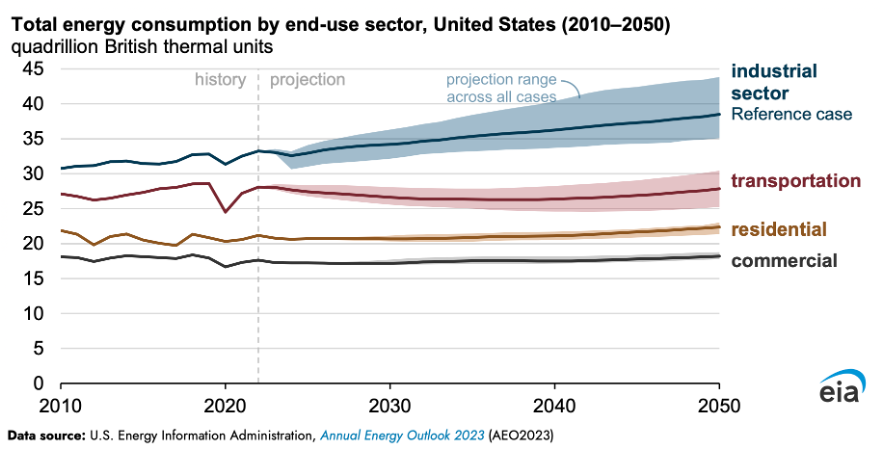
Today, ratepayers are on the hook for generation facilities that are no longer producing power while also paying for new assets. A recent study from Always On Energy Research notes that Wisconsin’s rates were outpacing national averages by 41% since 2001 – long before anyone could blame data centers. Combined with other economic factors, burdensome utility rates make Wisconsin uncompetitive for both new investments and keeping our proud companies here.
Nationally, utility bills are getting plenty of attention. Trends in Wisconsin were similar elsewhere. Grid upgrades have brough significant capital costs to ratepayers at a time when generation supply needs to grow, too. During President Trump’s latest State of the Union address, he announced a new ratepayer protection pledge that calls on large technology companies to produce or pay for their own power while not impacting everyday Americans’ budgets. This is the correct path to lead in AI while ensuring a robust national economy for all Americans.
U.S. National Labs are full of next-generation nuclear reactors that offer solutions to powering communities of all sizes in all places. Turbines needed for other sources like natural gas plants are backordered, opening the door for new companies and innovative approaches. States and communities will also take a serious look at changing how they approach their grid, electric generation, and how to attract new investments. Standardizing permitting processes, zoning, and electricity systems will be necessary to provide certainty for new builders. Additionally, these changes will likely remove unfair burdens, reduce the need for NDA’s, and ensure that utilities are not picking winners or losers.
One of the other common arguments against data center construction is water use. Water is a big deal, certainly. Water is not under threat by data center growth. As one researcher has covered, AI data centers use roughly 1% of the water used to irrigate all of America’s corn. Further, consider the water used for 65-100 homes. That’s the equivalent.

Wisconsin’s Opportunity
Prohibiting or pausing the embrace of AI is unnecessary and dangerous, especially in a state like Wisconsin. The issue appears two-fold: some fear AI while others are simply worried about costs and impacts. A new Marquette Poll found that more Wisconsinites now believe the costs of data centers will outweigh their benefit. This same poll noted that the benefits favored new jobs and taxes with only 18% believing the U.S. should lead in AI as important.
New construction and technical jobs are great. As property taxes climb, new sources of revenue can alleviate local burdens. We find that few too many people are talking about the true benefits of this new technological revolution. Think less of deep fakes or sloppy graphics, more abundance. Our state is home to incredible companies and people. We lead in agriculture, manufacturing, and health sciences. We should think of AI as augmenting, or amplifying, what we do rather than replacing it. Augmenting our brilliant minds and strong workers with the latest technology is an incredible opportunity to make sure Wisconsin keeps its edge and America remains a leader.
In agriculture, advances can bring more precision to farming, more data for efficient operations, and more affordability to automating. Manufacturing, a backbone industry in Wisconsin, benefits from more data to use less power, ensure quality control, predict maintenance needs, and build more resilient supply chains that help keep our state’s companies strong and employment high. Turning away from AI reduce opportunities for new drug discovery, slow development of next generation cures to diseases, and limit improvement of our health systems.
Lastly, AI must be considered along similar lines as natural resources, manufactured goods, and agriculture goods. Supply chains and access can cripple a nation’s security. It truly does matter if America wins the AI race and not China. This race will play an outsized role in determining if the next century is one of Western values or CCP-authoritarianism. It will determine our security, that of the West, and whether the American tech-stack will diffuse across the global south or not.
Conclusion
Costs have been steadily rising for consumers before AI data centers entered the mix. Now that these hyperscale facilities are expanding, states should follow the President’s lead and work to quickly allow private entities to produce their own power.
Wisconsin has a lot to gain from embracing the next wave of technological progress. Industries like agriculture, healthcare, manufacturing, and natural resources will continue to benefit from more efficiency, automation, and stronger supply chains.
Developers and AI companies need to work harder to communicate with Americans. Right now, it is often seen that the data center is the outcome. In reality, construction of data centers are simply a tool to achieve greater outcomes related to critical sectors of the Wisconsin economy.