
Running Out of Hands
Agricultural Technology and the Future of Wisconsin Farming
America’s Farms Are Running Out of Hands. We Needs to Act.
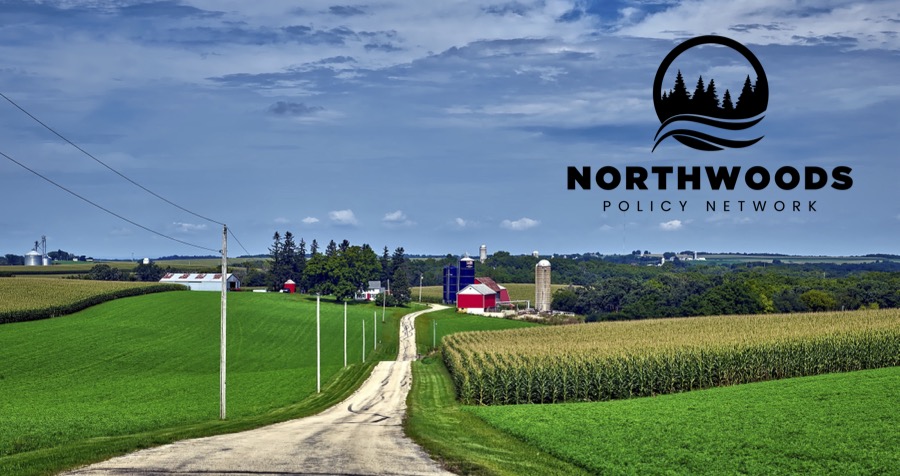
Walk the edge of a Wisconsin cornfield in late July and you understand what American agriculture is. It is sweat, diesel, soil and generational stubbornness. It is also, increasingly, disappearing.
The workers who have sustained U.S. food production for decades are disappearing — through attrition, through policy, through demographics — and no one in Washington has a plan that matches the scale of the problem. This must change. Wisconsin’s farmers are increasingly turning to automation, robotics, and AI to become more efficient with less, ensuring their work, and outputs, are maximized. These tools must become more accessible and affordable so we can ensure the survival of our family farms for generations to come.
The numbers tell a brutal story. Approximately half of U.S. farmers cannot hire all the workers they need, running roughly 20 percent short on average. Between March and July of 2025 alone, the agricultural workforce fell by 155,000 workers — a 7 percent drop in five months. An estimated 68 percent of the U.S. farm workforce is foreign-born with no domestic workforce to absorb the gap.
The H-2A temporary agricultural visa program has become the primary alternative but it was never designed for the load it now carries. Certifications have grown 185 percent over the past decade, reaching nearly 400,000 positions in 2025. Fruit and vegetable producers already spend up to 40 percent of total production costs on labor, and H-2A’s required minimum wage (ranging from $14.83 to $20 per hour) has risen roughly 30 percent in five years. Add mandatory housing, transportation, and compliance costs, and you have a system that is pricing smaller operations out of legal labor access entirely.
The Department of Labor projects H-2A demand will reach 550,000 positions by 2030, meaning the supply-demand gap widens regardless of near-term policy adjustments. Meanwhile, global food production must increase 50 to 100 percent by 2050 to feed a growing world population. A United States that cannot staff its harvest season cannot be the food-secure nation that global stability requires.
Automation Opportunity and Limits
The instinct to say ‘just automate it’ is understandable, and partially right. But the honest version of that argument is more complicated than the headlines suggest.
Selective harvest robotics remain unsolved at commercial scale for most crops. The controlled environment of a factory floor is a fundamentally different engineering challenge than an open field teeming with variables: different climates, soil conditions, and crop geometries across millions of individual farms.
What is available today, and working on real farms, is a growing class of autonomous support equipment — vehicles and robots that haul bins, transport materials across fields, mow, tow, scout, and spot spray. This work is physically demanding, repetitive, and accounts for enormous labor hours without requiring the skilled judgment of selective harvest. When autonomous systems absorb that load, output goes up, worker burnout goes down, and existing crews stretch further. New ventures also include AI/Machine Learning implements that use lasers to kill weeds, reducing chemicals and foreign dependencies for row-crop farms.
Vermont’s dairy operations offer an early proof of concept: robotic milking systems have been deployed as a direct response to workforce loss showing that labor substitution, where the technology exists, works. The University of Florida’s Institute of Food and Agricultural Sciences is pushing the frontier further by using AI to accelerate crop breeding, developing autonomous drones that could reduce equipment costs from $500,000 tractors to $50,000 drone units, and building digital twins of entire farm operations that give producers real-time intelligence on emerging threats and opportunities.
Wisconsin has been experimenting and adopting more robotic or AI systems in their operations. Given the loss of land and labor in the state, farmers are looking to become hyper efficient and agile to meet demand. Here, the state has one farm that hosts testing and experiments in partnership with Northcentral Technical College’s Agriculture Center of Excellence. UW-Madison has modeled potential costs, production growth, and revenue increases by incorporating Automatic Milking Systems. For 120 cow operations, the potential is there if we can create affordable entries with better financing options.
That last point matters enormously. AI-driven tools are becoming a democratizing force that give small family farms access to the same sophisticated market analysis, predictive modeling, and precision field intervention that large agribusiness corporations have long taken for granted. That potential will only be realized if the technology is designed to be affordable and accessible, not just technically impressive.
Wisconsin Can Lead
For Wisconsin, this is not an abstract federal debate. It is about the survival of a way of life.
Wisconsin ranks among the top agricultural states in the nation — a legacy built on dairy, grain, vegetables, and the stubborn ingenuity of family operations that have farmed the same land for generations. These are not corporate operations hedging risk across a portfolio. They are families who cannot afford to absorb a 20 percent labor shortfall mid-season, cannot navigate a $500,000 equipment purchase, and cannot wait for Washington to catch up.
Wisconsin should be positioning itself as an agricultural technology leader; not just a recipient of federal policy, but a shaper of it. That means state investment in ag-tech pilot programs at UW-Extension and technical colleges, partnerships with equipment manufacturers to field-test affordable automation tools suited to the scale of Midwestern family farms, and aggressive engagement with federal agencies to ensure Wisconsin producers are at the table when program criteria are written.
The goal is not to industrialize Wisconsin agriculture. It is to ensure that a fourth-generation dairy farmer in Marathon County has access to the same tools — at a price and complexity level that fits their operation — that a California mega-farm can deploy with an in-house engineering team. Affordability and user-friendliness are not afterthoughts; they are the difference between a policy that works and one that only works for the largest players.
For Washington
The federal government has both the obligation and the tools to address this crisis. Northwoods Policy Network suggests the following:
First, establish a National Agricultural Automation Investment Fund. Congress should authorize USDA funding and extend other financial tools to qualifying ag-tech capital expenditures, with priority access for small and mid-size operations. High interest rates can be debilitating to the sector.
Second, reform H-2A to reduce cost and processing friction. Streamline application timelines, cap wage escalation to regional cost-of-living indices, and explore multi-year worker authorizations. The program has become the de facto labor backstop for American agriculture; it should function like one.
Third, fund selective harvest robotics R&D through USDA and NSF. A competitive grant program with explicit commercialization milestones, not just academic publication, can close the gap between what automation can do today and what farms need. The goal should be deployable harvest technology quickly.
Fourth, create a Rural Workforce Transition Program. Automation will reshape agricultural employment; it should not hollow it out. Federal workforce development dollars should flow to land-grant universities and community colleges in agricultural regions, including Wisconsin’s robust technical college system, to train workers in robotics operation, maintenance, and precision agriculture management.
Fifth, designate agricultural supply chain continuity as a homeland security priority. A 7 percent workforce drop in five months, with a 550,000-position deficit projected by 2030, is a foreseeable disruption risk. DHS and USDA should conduct a joint vulnerability assessment and develop contingency protocols. Food security is national security.
If We Wait
The farms that survive this decade will be the ones that adapt. The question is whether they adapt with federal support, or in spite of, federal neglect.
Wisconsin’s farmers are resilient. They have navigated price collapses, trade wars, droughts, and consolidation pressures. But resilience is not infinite, and the current labor crisis is structural, not cyclical. No immigration policy outcome, however favorable, reverses a demographic trend that has been building for a generation.
The technology exists to help — not to replace farmers, but to extend what they can do with the crews they have. Making that technology accessible, affordable, and built for operations of every size is not a niche agricultural concern. It is a question of whether America can still feed itself — and whether Wisconsin will remain one of the places that answers that question with a yes.