
Why Northern Wisconsin Logging Deserves A Chance To Be Dominant Again
How forest management, new markets, and smart investment could revive rural Wisconsin.
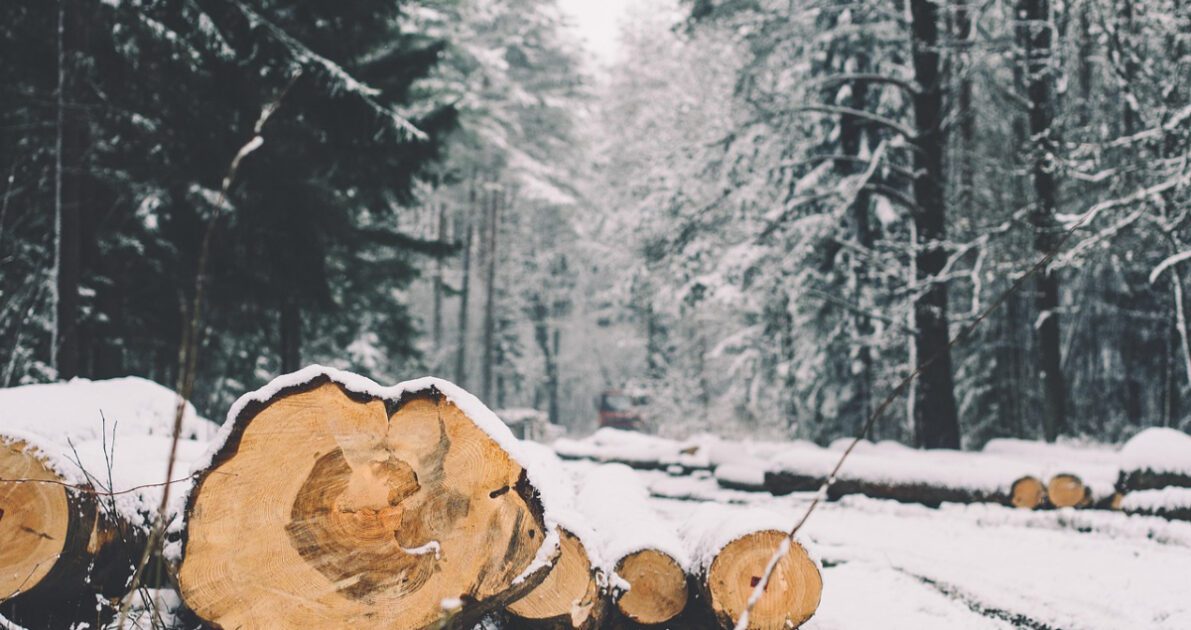
When people think of Wisconsin, they often think of great cheese, the Green Bay Packers, brats, and, well, winter. What is often overlooked are the legacy industries – and their people – that built the state and underwrote America’s meteoric rise. These industries have provided great jobs and carried communities for over a century. Chief among these forgotten industries is forestry.
Wisconsin holds many advantages that do not get enough attention. Our proximity to the world via Lake Superior, Lake Michigan, and the Mississippi River as well as elite natural resources on and under our grounds. This isn’t just rocks and logs. They are critical advantages that we hold from our geography. In the 19th Century, Wisconsin’s lead mining boom, and proximity to transportation, helped the United States undercut European markets[1] and American reliance upon them. This led to great economic gains and strategic independence making America a force to be reckoned with.
Timber may not seem pressing, but history has shown us that the raw materials required to build society are critical. In the early 1900’s, Japan had identified the large industrial value of timber by colonizing Korea. By rapidly feeding its imperial economy, Japan became an industrial powerhouse in the lead up to World War II.[2] This is not to say that our forests will prepare us for war, but they can provide the economic opportunity and manufacturing dominance that could prevent one. Having industrial capacity and capability reduces leverages against our interests. For too long, we have neglected these advantages.
Our woods need more management. Conservationists who spend much of their time recreating and hunting our big timber tracts have commonly cited the presence of old-growth, or over-mature, forests that are becoming less hospitable to wildlife and more challenging for access. There is growing concern about the challenges of our state’s industry as well, including the impact on the state economy, rural prosperity, and health of forests in general.[3]
Wisconsin’s woods are large, and they are healthy. Almost 40% of Wisconsin’s landscape is covered in forests, a total equalling roughly 17 million acres.[4] Further, our annual growth of forestland is double the volume we remove.[5] This highlights the sustainability of forestry practices and the unrealized capacity to do more. Today, we cannot allow forests to renew themselves with fires. This requires active management to maintain productive forests. Forests that are growing are healthy while over-mature forests benefit no one.[6] Our forests require management to remain healthy, reduce risk of forest fire, and continue providing exceptional habitat for wildlife.
Wisconsin’s loggers and forestry industry have built and sustained whole communities and the families that inhabit them. Forestry, wood, and paper industries have deep roots in our rural economy and culture.[7] A healthy forest industry is critical to our ability to sustain resilient forests, recreation, and wildlife habitat that underwrites our massive outdoor industry.
Wisconsin’s forestry industry and its related sectors account for over 11% of the state’s total manufacturing jobs.[8] Pound for pound, its reputable nationwide. For those working in the forest product industry, annual incomes average around $81,000 – ahead of the state average of $67,000.[9] For the loggers, wages hover around $64,000 annually, below the state’s average. Plus, for every 100 jobs in the forest products sector there are an additional 122 jobs supported in other sectors of the economy.[10] This multi-billion-dollar export industry is one to be proud of and one to protect.
Forestry and its related sectors are in decline. Since 2001, jobs have been consistently decreasing. In the paper industry 73% of jobs are gone, in wood building materials its 50%, and in sawmill employment, the figure is 27%[11] over the last quarter century. In smaller communities and rural counties these losses are magnified. The loss of employment ripples through to sectors that are intertwined to forestry. As the jobs go, so too does population. These further strains smaller school districts, the viability of having a grocery store, and the literal survival of a town if new sectors do not emerge.
For example, in 2020 when the Verso plant closed in Wisconsin Rapids, 25% of pulpwood processing disappeared. That loss, among others, ripples through the entire state’s forestry economy. Between 2014 and 2021, there had already been a 20% harvest decrease in the Northern region,[12] a negative trend before another plant had even closed.
The impacts on local and county budgets cannot be ignored. Faced with demographic challenges, rising costs of providing services, operating expenses, and infrastructure upgrades are placing high burdens on residents. Counties have traditionally relied upon timber sales as a consistent source of revenue. This revenue has been dropping, with an especially stark 22% decrease between 2022 and 2023.[13] To adjust for these losses, state aid or property taxes become the only alternatives.
So, what is there to do? There are more options than one may immediately consider. A new market opportunity for our timber industry may be refining sustainable aviation fuel, or SAF, to meet European demand. Aviation fuel used in European Union nations requires 20% of their aviation fuel to be sustainable by 2035. That percentage is expected to grow.
Wisconsin has been identified as a prime location to meet this need. A German organization is working to make Hayward the home of a $1.5 billion pulpwood facility. To finalize this investment, members of the Wisconsin Legislature introduced Senate Bill 456 – The Forestry Revitalization Act. Through a combination of tax credits and bonds paid through the already existing forestry account, Wisconsin could land this historic investment.
This bill would require that 80% of all wood material be sourced from Wisconsin forests.[14] That means a new demand for Wisconsin’s loggers, truckers, operators, as well as their families and local communities. At the facility, which would be the North American headquarters, there would be an influx of over 150, well paying, new jobs.
The bill holds a significant amount of claw backs to protect taxpayers if the project stalls or funding from the company fails. It is estimated that the state, through credits and bonds, would need $200 million to secure this new investment. This is no small dollar amount but the bill deserves real consideration by the full legislature.
In 2023, Wisconsin passed a package that included over $500 million in public spending to upgrade American Family Field for the Milwaukee Brewers.[15] In 2015, the Milwaukee Bucks secured $250 million in taxpayer funds for a new stadium as well. Over the span of 8 years, Milwaukee professional sports teams celebrated over $750 million in tax commitments. Northern Wisconsin deserves the same consideration, especially considering that the investment focuses on Wisconsin’s forestry workers and not billionaire sports owners.
More attention should be given to the viability of power generation from biomass. Arguably the state’s largest renewable resource, biomass accounts for a large percentage of Wisconsin’s renewable energy portfolio. As of 2017, biomass had accounted for a majority of renewable energy production here.[16] In many towns, biomass has powered schools and government buildings for decades. This type of energy use helps mitigate rising energy costs for taxpayers and reduces the unpredictable market swings of natural gas, propane, and grid upgrades.
Gundersen Health in La Crosse became the first known healthcare organization to achieve energy independence in 2014. Biomass played a significant role in this accomplishment.[17] Creating heat and electricity with wood biomass has saved the organization around $500,000 per year. More efforts should consider the use of woody biomass to lower the costs of healthcare and public entity operating costs.
As technology continues to evolve rapidly, manufacturing processes are becoming more efficient. Efforts to reshore industrial capacity to the United States also involves the expansion of intermediate and final processing of forestry products. Wisconsin and its universities should continue to study and welcome new opportunities in this sector.
Currently, much of Wisconsin’s forest harvest is exported in low-value form like logs to China.[18] Tightening the supply chain of timber products can capture more value here at home. This type of opportunity brings more jobs and prosperity to our rural communities.
Wisconsin’s long legacy of the forestry industry is one to be proud and protective of. While our forests continue to grow at a rapid pace, our harvests and the associated jobs around it are consistently declining. This disproportionally impacts our northern and rural areas of the state. Opportunities do exist to welcome new investments and ideas to turn this tide. Our local communities deserve attention to flex their forestry industry once again before it’s too late.
Failure to capture new investments will cause permanent job losses and put our communities in a position that other areas of the state cannot imagine. From new fuel sources, energy production and manufacturing opportunities, the industry is ready for disruption.
[1] Wisconsin Historical Society. Lead Mining in Wisconsin. n.d. https://www.wisconsinhistory.org/Records/Article/CS408
[2] Pyne, Stephen. In the Line of Fire. 2015. https://foresthistory.org/wp-content/uploads/2016/12/2015_Pyne_in-the-line-of-fire.pdf.
[3] Wisconsin Council on Forestry. Wisconsin’s Forest Products Industry Signs of Challenges Ahead. 2024. https://councilonforestry.wi.gov/Meetings/DRAFT%20Industry%20Trends%20Narrative%20Nov2024.pdf p 1
[4] Dahal, Ram. Economic Contributions Of The Forest Products Industry To Wisconsin’s Economy, 2025. Wisconsin DNR, 2025. https://widnr.widen.net/s/fjhp2ktrzp/winsconsin-forestry-economy-2025 p 2.
[5] Ibid, p 3
[6] State of Wisconsin. Rural Voices for Prosperity: Governor’s Blue Ribbon Commission on Rural Prosperity. WEDC, 2021. https://ruralwi.com/wp-content/uploads/2021/10/Governors-Blue-Ribbon-Commission-Report.pdf p 67.
[7] Ibid, p 67
[8] Wisconsin Council on Forestry. Wisconsin’s Forest Products Industry Signs of Challenges Ahead. 2024. https://councilonforestry.wi.gov/Meetings/DRAFT%20Industry%20Trends%20Narrative%20Nov2024.pdf p 1
[9] Dahal, Ram. Economic Contributions Of The Forest Products Industry To Wisconsin’s Economy, 2025. Wisconsin DNR, 2025. https://widnr.widen.net/s/fjhp2ktrzp/winsconsin-forestry-economy-2025 p 6.
[10] Ibid, p 12
[11] Wisconsin Council on Forestry. Wisconsin’s Forest Products Industry Signs of Challenges Ahead. 2024. https://councilonforestry.wi.gov/Meetings/DRAFT%20Industry%20Trends%20Narrative%20Nov2024.pdf p 2
[12] Wisconsin Council on Forestry. Wisconsin’s Forest Products Industry Signs of Challenges Ahead. 2024. https://councilonforestry.wi.gov/Meetings/DRAFT%20Industry%20Trends%20Narrative%20Nov2024.pdf p. 4
[13] Dahal, Ram. Economic Contributions Of The Forest Products Industry To Wisconsin’s Economy, 2025. Wisconsin DNR, 2025 p. 5
[14] Forestry Revitalization Act, SB 456, State Senate (2025). https://docs.legis.wisconsin.gov/2025/proposals/sb456
[15] Casey, Evan. “Gov. Tony Evers Signs Brewers Stadium Bill, Ensuring Team Stays in City Until 2050.” Wisconsin Public Radio, December 5, 2023. https://www.wpr.org/politics/gov-tony-evers-signs-brewers-stadium-bill-ensuring-team-stays-city-until-2050 p. 1
[16] WI PSC, 2017 https://psc.wi.gov/Documents/OEI/WisconsinEnergyStatistics/Final_Wisconsin%20Energy%20Statistics%20book%202017pdf%20v5_0.pdf p 5
[18] State of Wisconsin. Rural Voices for Prosperity: Governor’s Blue Ribbon Commission on Rural Prosperity. WEDC, 2021. https://ruralwi.com/wp-content/uploads/2021/10/Governors-Blue-Ribbon-Commission-Report.pdf p. 68.